

Deus ex Paginis
and how Lucy Pevensie inspires my inner-author

The leaves didn’t change this year. It’s ironic, isn’t it? How normal it feels that nearly everything has shifted, yet consistency is the jarring awakening to everything being different.
I’ve lived in Waco, Texas for two months as of today. Land of the infamous Branch Davidian cult, Dr. Pepper, Magnolia, and Baylor University. I think I romanticized academia for much of my life. Libraries, coffee-stained pages of textbooks I paid far too much for only to read once, a perfectly uncomfortable amount of sleep depravity- it all always seemed profoundly scholarly. To study scripture in ways I never have has opened my eyes to the world within the pages of my Bible. To learn the journalistic method of storytelling has been troublingly didactic. For every scholastic lesson learned here at Baylor, there has come a slew of peculiar adversities as if to test my character. Those coffee-stained pages, evidence of a scholar, only tell the story of late-night library sessions. Absent is the narrative of inevitable and radical character development the scholar endured and continues to endure as she continues to read. That narrative will have to live here, spoken through a keyboard, I suppose.
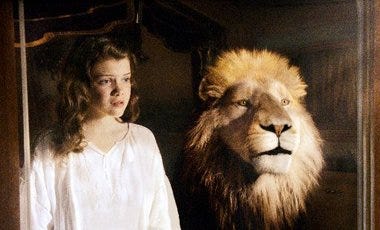
Writing (and consuming the written word of others) has always been an outlet for me. When I think of writing that struck me, writing that changed me, watching Lucy Pevensie of The Chronicles of Narnia grow from a shy young girl into a courageous young woman comes to mind. There were moments in her story when I felt that her heart bled through the ink of C.S. Lewis’s words. Moments when “courage, dear heart” (a quote from Aslan I display in my dorm room and ponder often) wasn’t enough to calm her spirit. Lucy, the unvarnished embodiment of childlike wonder, still needed to see Aslan moving, breathing, and working in her story. To write like Lewis is to write in deep empathy for the heart bleeding with Lucy’s on the other side of the pen. I wanted that. I still want that.
I remember initially being disappointed with how little a journalist is able to share their heart through their work. We are constantly reminded to exclude ourselves from the plot of history as we know it. In a way, it reminds me of my work as a photographer. In the thousands of photos within your portfolio lies the story of your creative life, yet you are absent from it. It is difficult to be the deficit in the chronicle of your own life, but there is such beauty in it. By removing myself, I am able to see people not as appendages to my life and my story, but rather as the Lucy Pevensies of their own world carving out their own path to Cair Paravel. Troubled, however, by the inability to write like Lewis in journalistic content, I asked a professor of mine how passionate writers can stand to be journalists. She told me that to do a story justice is to honor the passionate writer within ourselves; that’s when it all clicked.
Sometimes your heart needn’t bleed through the ink. Perhaps the most exquisitely heart-rendering stories let Lucy’s heart bleed instead. When I stop to consider a version of Lucy who was portrayed to be brave from the beginning, I realize her story would have never inspired me the way it does now. Literary scholars often reference the Latin cliché “Deus ex machina.” Though it directly translates to “God from the machine,” the phrase commonly refers to an unexpected force that radically alters the trajectory of a story. At first, I referred to this epiphany of mine as a “Deus ex Texana” moment, attributing the trajectory-altering moment to my relocation to Texas. However, about a month later, I’ve come to understand that a better phrase is “Deus ex paginis:” God from the pages. Perhaps my coffee-stained pages say enough. Perhaps just my very existence is evidence that God writes beauty in the fabric of the universe. Here lies humanity, the crown of His creation, yet He is so often excluded from the story we tell. What I’m saying is that I don’t think I need ink to be an author. I am poetry. I am the pages through which God’s heart bleeds for the love of His creation. He is the beauty within the pages of my story.
Deus ex paginis never changes, and yet He was the jarring awakening to a world in which I needn’t be anything more than I already am. He is the absence of foliage and the presence of perennial beauty. I’m rather fond of that story.